How to Prevent Warehouse Theft in Malaysia: 12 Practical Steps
Most warehouse losses happen at the gate, the loading bay and after hours, often with help from inside. Twelve practical steps to tighten security at your warehouse in Malaysia, from vehicle checks to CCTV and patrol records.
Warehouse theft is rarely a dramatic break-in. More often it is a few cartons that leave on the wrong lorry, stock that "goes missing" between receiving and putaway, or a side gate left unlocked over a long weekend. Each loss looks small. Over a year, they add up to real money, damaged customer trust and, for audited sites, uncomfortable questions.
This guide sets out twelve practical steps to prevent warehouse theft in Malaysia. Most of them cost little. What they need is consistency: the same checks, done properly, every shift.
Where Warehouse Theft Usually Happens
Before spending money on equipment, it helps to know where losses tend to happen. In most warehouses, the weak points are:
- The main gate, where vehicles, drivers and goods come and go
- The loading bay, where goods are counted, loaded and signed for in a hurry
- The yard and perimeter, especially at night and around parked trailers
- Inside the building, where staff, contractors and visitors move between areas
- After hours and during shutdowns, when the site is quiet and checks become routine
A large share of losses involve someone on the inside, either taking goods themselves or helping someone outside. Good warehouse security deals with both outside and inside threats, without treating every employee as a suspect.
1. Start With a Simple Risk Assessment
Walk the site at different times of day and night. Note where goods can leave without being checked, where cameras cannot see, which doors are left open for convenience, and which areas hold your highest-value stock.
Look at your own records too. Where have stock differences shown up before? Which shifts, which product lines, which customers? The answers tell you where to start.
2. Control the Gate
The gate is your first and last line of defence. Every vehicle that enters and leaves should be recorded: vehicle number, driver, company, time in and time out, and the purpose of the visit.
Drivers should wait in a designated area rather than walking freely around the warehouse. Anyone without a clear reason to be on site should not get past the gate.
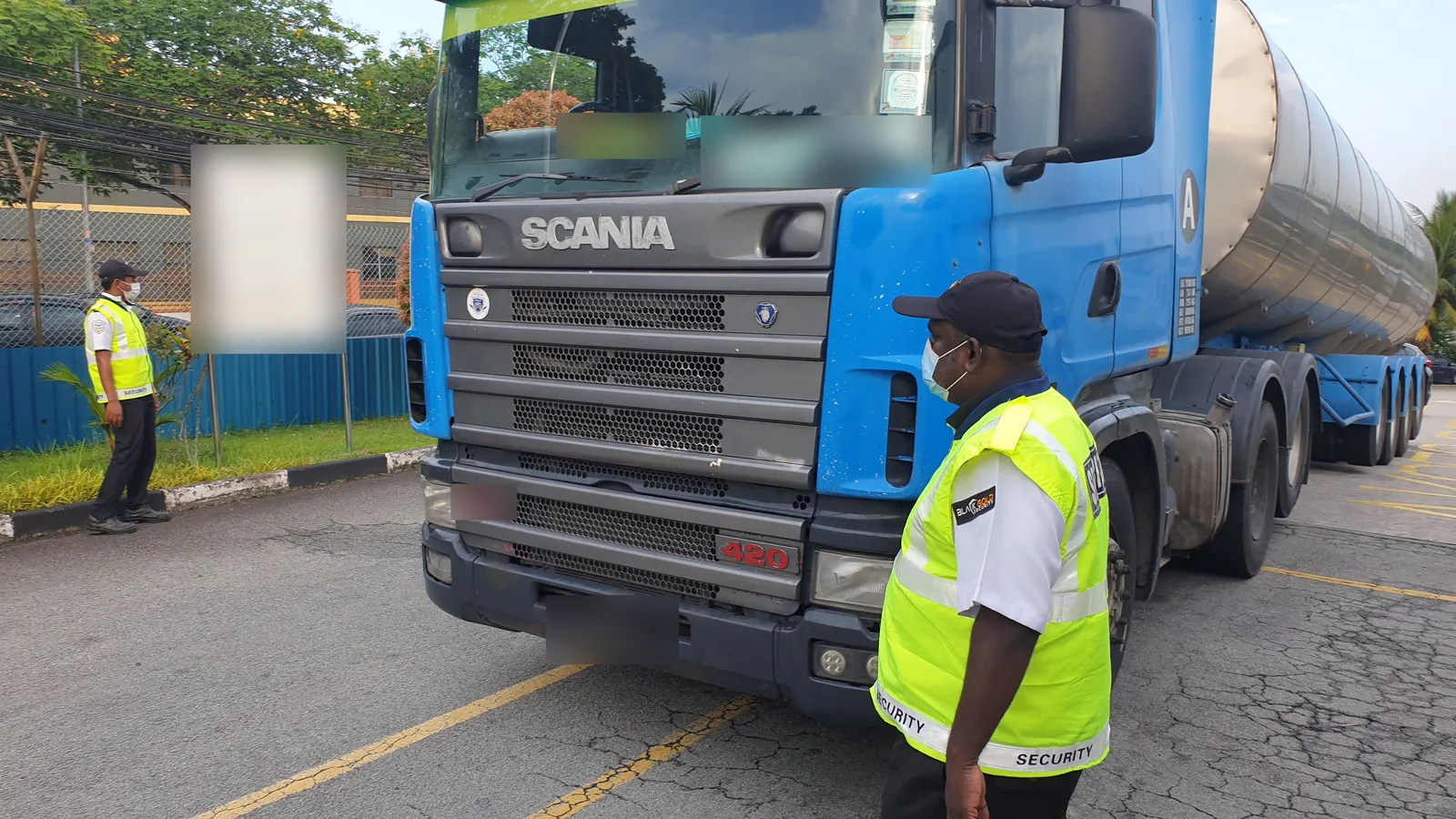
3. Check Outgoing Vehicles and Goods Against Documents
Most goods that are stolen leave through the gate in a vehicle. Outgoing lorries, vans and cars should be checked before they leave:
- The goods on board match the delivery order or gate pass
- Seal numbers on containers and trailers match the paperwork
- Cabins and boots are checked according to your site rules
- Any mismatch is stopped, recorded and reported, not waved through
This only works if security officers have the authority to hold a vehicle until a supervisor confirms. Make that clear in writing, and back your officers when they use it.
4. Limit Who Can Go Where
Not everyone needs access to every part of the warehouse. Divide the site into zones, such as the office, the warehouse floor, the loading bay and a locked cage for high-value stock, and give access only to the people who need it.
An access control system with cards, PIN codes, fingerprint or face recognition makes this practical and creates a record of who opened which door and when. Turnstiles and barriers help at busy entrances.
5. Register Every Visitor and Contractor
Contractors, cleaners, delivery crews and visiting staff all move around your site. Each one should be registered, approved by the person they are visiting, and given a pass that shows where they are allowed to go.
A visitor management system replaces the paper logbook with pre-registration, a QR pass, host approval and ID and photo capture, so you know exactly who was on site at any time.
6. Cover Blind Spots With CCTV
Cameras should cover the gate, the loading bays, the yard, the perimeter and any area holding high-value stock. Check that you can read a vehicle number at the gate and see what is being loaded at each bay.
Two points are often missed:
- Keep recordings long enough to investigate a loss that is only noticed during a stock count weeks later
- Recordings alone do not stop theft. Someone has to watch the cameras live or respond to alerts
Our video surveillance team can survey your site and design camera positions around your actual risks.
7. Make Sure Patrols Actually Happen
A patrol schedule on paper means little if no one can prove the rounds were done. A guard patrol system uses NFC or QR checkpoints placed around the site. Officers scan each checkpoint on their rounds, GPS tracks the route, and missed checkpoints raise an alert.
Officers can also send photo incident reports, such as an open door, a broken fence or a suspicious vehicle, straight from their phone. You can see every patrol on a dashboard instead of relying on a logbook.
8. Secure the Perimeter and Yard
Thieves look for the easiest way in and out. Check your perimeter regularly:
- Repair damaged fencing and gates quickly
- Light the yard, loading bays and fence line properly at night
- Keep vegetation and stacked pallets away from the fence
- Lock parked trailers and containers, and record their seal numbers
- Keep side gates and emergency exits closed and alarmed
9. Tighten Your Inventory Controls
Security officers cannot stop losses that are hidden in the paperwork. Good inventory controls make theft harder to hide:
- Regular cycle counts, focused on high-value and fast-moving items
- Separate duties, so the person who receives goods is not the same person who updates the stock records
- Two people to sign for high-value deliveries and dispatches
- Investigate every stock difference promptly, not just at year end
10. Reduce the Risk of Insider Theft
Most staff are honest, and clear rules protect them as well as the company. Practical steps include:
- Background checks for new hires, especially for roles with access to stock
- Personal lockers outside the warehouse floor, so bags stay out of storage areas
- A clear exit search policy that applies to everyone, carried out fairly and respectfully
- A confidential way to report concerns, so staff can speak up without fear
- Rotating duties where practical, so no one person controls a process for too long
11. Protect the Site After Hours and During Shutdowns
Nights, weekends and festive shutdowns are high-risk periods. Fewer people are on site, routines slip, and a problem may not be noticed until work restarts.
Before a shutdown, agree who checks what, and when. Lock-up checks at closing, regular mobile patrol visits and a clear alarm response plan make a big difference. For long breaks such as Chinese New Year or Hari Raya, consider adding short-term guards or patrols for the period the site is closed.
12. Report, Review and Improve
Every incident, even a small one, should be recorded with photos, times and the people involved. Review incident and patrol reports each month with your security provider. Look for patterns: the same gate, the same shift, the same type of goods.
Security is not set once and left alone. As your operations, stock and staff change, your security plan should change too.
What to Look For in a Warehouse Security Provider
If you use a security company, its officers are only part of the service. When comparing providers, ask:
- Are officers KDN-certified and trained on your site's procedures before they start?
- How are patrols recorded, and can you see the records yourself?
- Who supervises the officers, and how often do supervisors visit?
- Is there a 24/7 control room and a response team if something goes wrong?
- What happens when an officer is on leave or sick?
Our checklist of 7 questions to ask before hiring a security company covers this in more detail.
How Black Gold Security Protects Warehouses in Johor
Black Gold Security provides factory and warehouse security across Johor Bahru, Iskandar Puteri, Pasir Gudang, Senai and Kulai. Every guarding contract includes:
- KDN CSG-certified officers, trained in fire safety and first aid and inducted on your site before their first shift
- A dedicated site supervisor
- Our guard patrol system, with checkpoint scans and photo incident reports
- Incident and shift reports
- A 24/7 control room and 24/7 mobile response team
- Relief guards, so your posts are never left empty
We can also add mobile patrols, live CCTV monitoring, access control and visitor management, so your warehouse is protected by people and technology working together.
Get a Warehouse Security Assessment
Every warehouse is different. Book a free consultation and we will walk your site, show you where the gaps are and recommend the right mix of officers, patrols and systems for your operation.