Vacant Property Security in Johor: A Practical Guide for Owners
How to protect an empty factory, warehouse, shophouse or unsold development in Johor from theft, vandalism and trespass, with a weekly checklist and a real example of what worked.

An empty building is an easy target. With nobody on site, thieves have time to strip cables, piping and fittings, and trespassers can move in without being noticed. Damage often goes unseen for days or weeks, and by then the repair bill can be far higher than the cost of protecting the site.
In Johor this applies to closed or relocated factories, warehouses between tenants, shophouses waiting to be let, and unsold or stalled developments. This guide covers the main risks, a simple layered plan, a weekly checklist, and an example of how we secured one vacant property in Johor Bahru.
The Main Risks to a Vacant Property
- Theft of metal and fittings. Copper piping, electrical cables, aluminium frames, air-conditioning units, switchboards and even manhole covers have resale value. Thieves often return to the same site until they are stopped.
- Trespass and squatting. Empty buildings attract people looking for shelter, a place to store stolen goods or somewhere to gather unseen.
- Vandalism and fire. Broken windows, graffiti and deliberate or accidental fires are more likely when nobody is around to notice or respond.
- Water and weather damage. A burst pipe, a blocked drain or a leaking roof during monsoon season can cause serious damage if nobody checks the building.
- Illegal dumping. Open compounds and empty lots are used to dump construction waste and rubbish, which the owner then has to clear.
Start With a Risk Assessment
Before deciding on guards, patrols or cameras, walk the site and note:
- How easy it is to get in: fence condition, gaps, gates, low walls and roof access
- Where an intruder could work without being seen from the road
- What is worth stealing, and whether it can be removed or locked away
- Lighting at night, especially at entrances and along the perimeter
- How quickly anyone could respond if something happened at 3am
The answers decide how much protection the site needs. A small shophouse with nothing inside may only need good locks and regular checks. A large factory with copper, cabling and machinery still in place usually needs people on site.
Build Your Protection in Layers
No single measure protects an empty site on its own. The most effective approach combines several layers, so that if one fails, the next one still works.
1. Physical security
- Repair fences and walls, and close every gap
- Lock gates with heavy-duty padlocks and chains, and restrict who holds the keys
- Board up or secure ground-floor windows and doors
- Remove valuables, or store them in one locked, inspected area
- Keep the compound clear, so intruders have nowhere to hide
2. Lighting and signage
Light entrances and the perimeter at night. Motion-activated lights are cheap and effective. Clear signs stating that the site is guarded and monitored discourage casual intruders.
3. Security officers on site
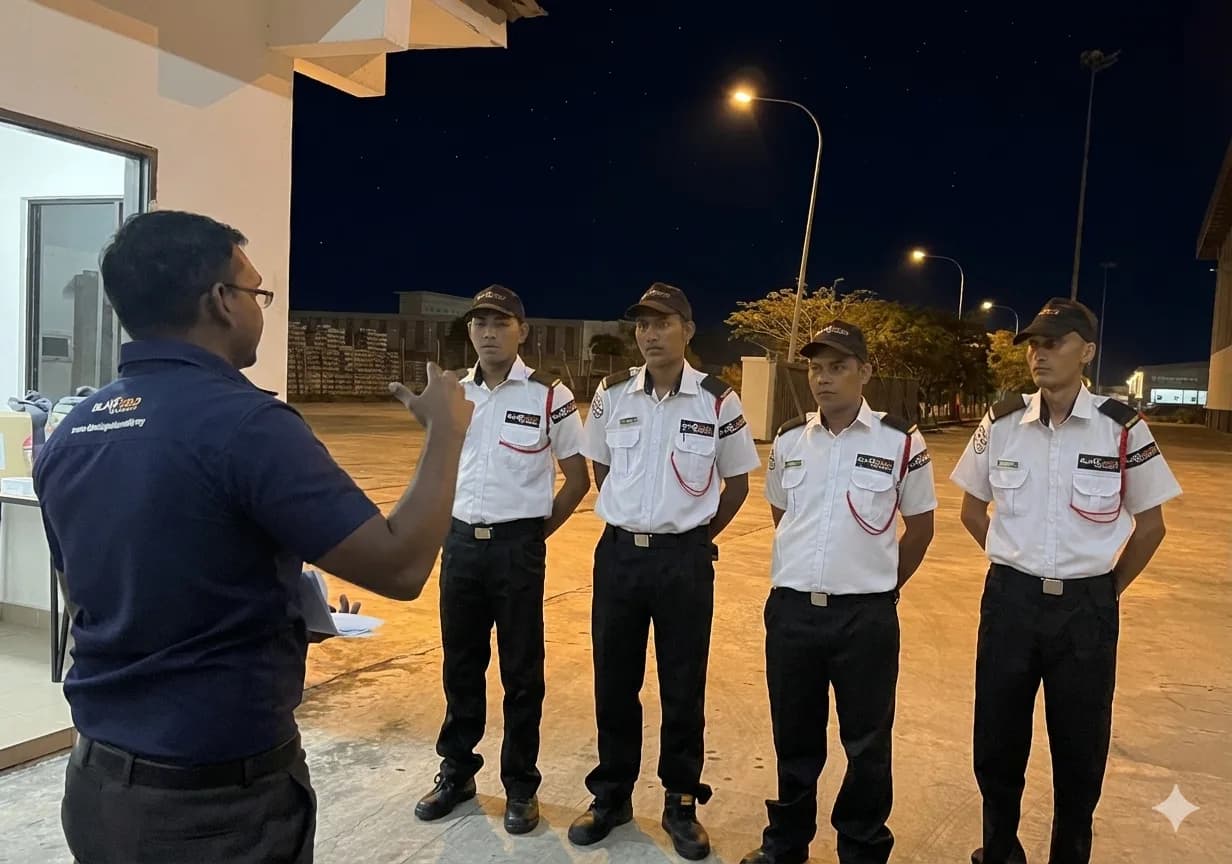
For larger or higher-risk properties, uniformed security officers are the strongest deterrent. They control the gate, carry out foot patrols, record who enters and report problems straight away. A guard on site also notices leaks, damage and fire risks that cameras miss.
4. Patrols
Where a full-time guard is not needed, scheduled or random mobile patrols can check the site several times a day and night. Random timing matters: if thieves can predict when a patrol comes, they simply wait for it to leave.
If you use patrols, ask how they are verified. An electronic guard patrol system records every checkpoint scan with a time stamp, so you can see each visit actually happened.
5. Guard dogs
For large, open compounds, a trained guard dog working with a handler adds a strong deterrent and an early warning. Dogs are particularly useful at night and on sites with many hiding places.
6. CCTV and remote monitoring
CCTV records what happens, but a camera on its own does not stop a theft in progress. It works best when someone is watching, either a guard on site or a remote monitoring team that can respond to an alert. Make sure power and internet stay connected while the building is empty.
A Weekly Checklist for Vacant Properties
Whoever checks the site, whether your own staff, a guard or a patrol, should go through the same list every time and record the result:
- Fence, walls and gates intact, and locks not tampered with
- Doors, windows and roof access secure
- No signs of entry: footprints, cut wires, moved items, rubbish or bedding
- No water leaks, blocked drains or roof damage, especially after heavy rain
- Electrical boards and remaining fittings still in place
- Lights working at the entrances and perimeter
- Cameras recording, with the correct time and date
- No dumped waste in the compound
- Photos taken of any change, with the date and time
Keep these records. They help with police reports and insurance claims if something does happen.
Check Your Insurance
Many property insurance policies have conditions for buildings left unoccupied, often after a set number of days. These can include regular inspections, minimum security measures or notifying the insurer that the building is empty. Check your policy wording or ask your insurer, because a claim may be refused if those conditions are not met.
Example: Stopping Repeated Copper Theft in Johor Bahru
One vacant property in Johor Bahru was repeatedly targeted by thieves stealing copper piping and damaging the building's infrastructure. Each visit cost the owner more in repairs.
We started with a risk assessment that identified poor lighting, weak access control and several blind spots. Based on that, we put in place a layered plan:
- Security officers stationed at the entrances to control access and carry out scheduled foot patrols
- A trained guard dog to strengthen the perimeter and give early warning at night
- Random mobile patrols to check the site and respond quickly to any incident
The combination of visible officers, a guard dog and unpredictable patrols stopped further break-ins and prevented additional losses.
Choosing the Right Level of Protection
- Empty shophouse or small unit (lower risk): good locks, lighting and regular patrols
- Warehouse between tenants (medium risk): patrols, CCTV with monitoring and periodic checks
- Closed factory with equipment or cabling (high risk): security officers on site, patrols and CCTV
- Large unsold or stalled development (high risk): officers at the entrances, patrols, and guard dogs for large compounds
Every site is different, so treat this as a starting point rather than a rule.
Need to protect a vacant property in Johor? Book a free consultation and we will assess the site and recommend the right mix of officers, patrols and technology. You can also read our checklist of 7 questions to ask before hiring a security company.